Archive | Kentucky RSS feed for this section

The Patrick McNeese interview, unabridged

23 Aug

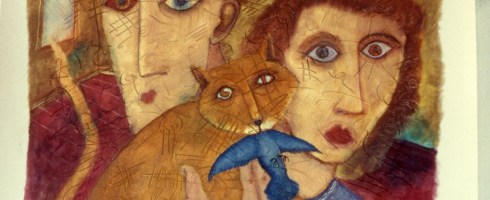
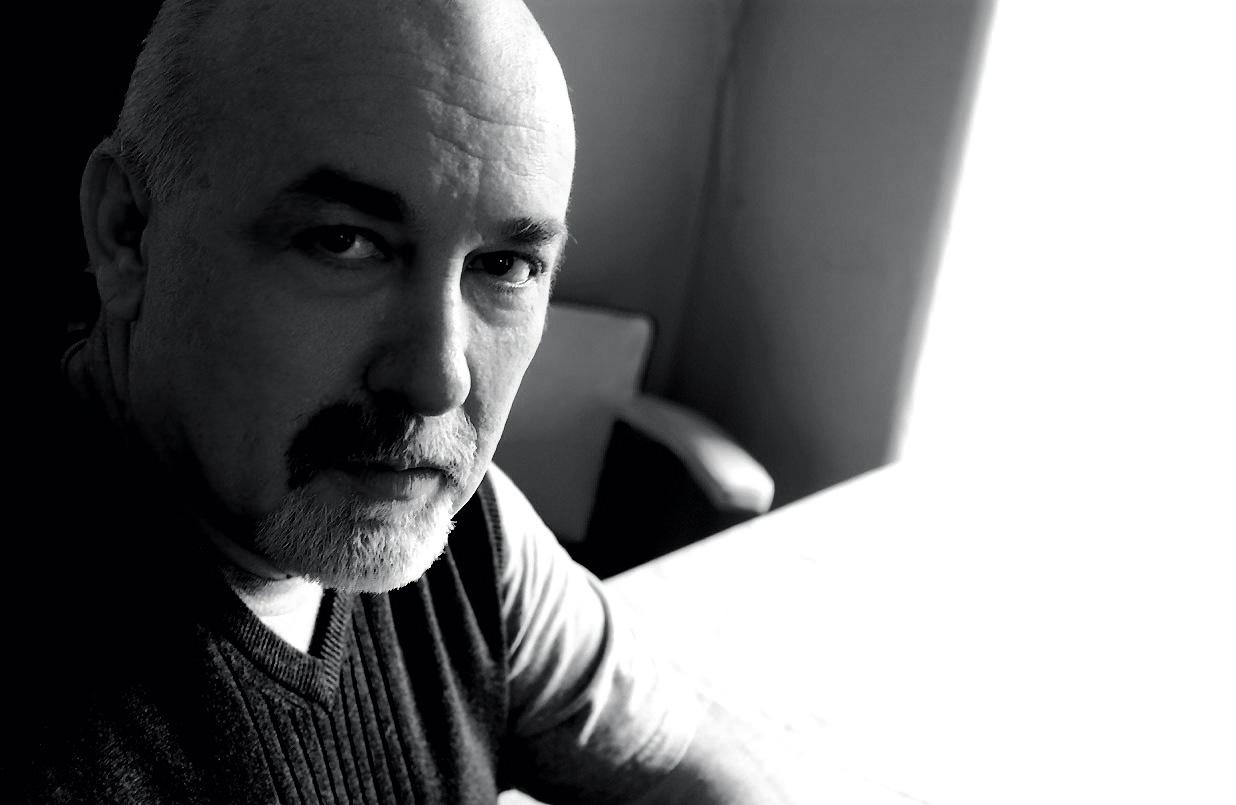
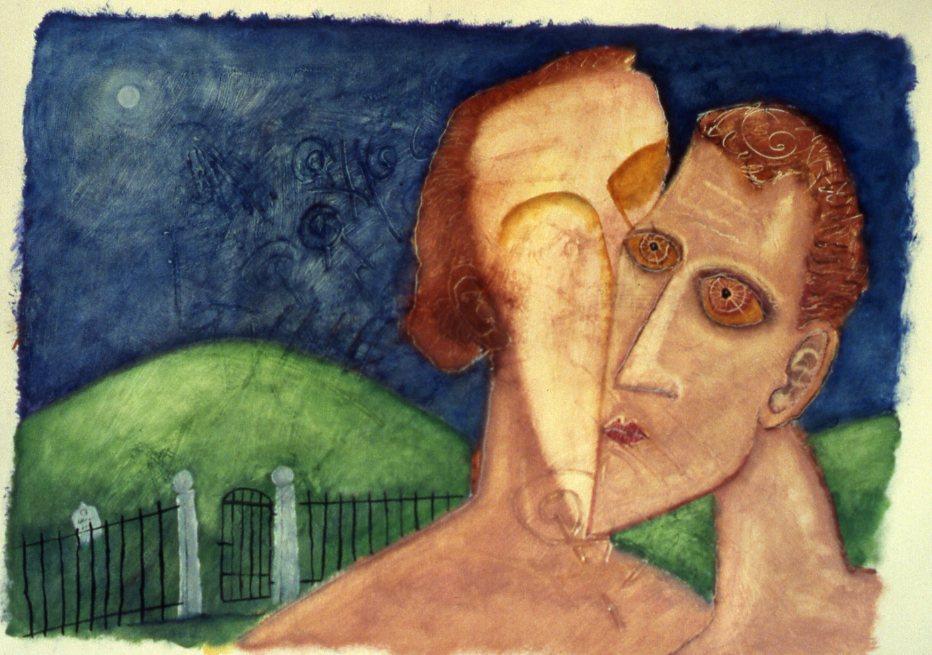
A seminal figure in downtown Lexington’s art scene, Patrick McNeese is an accomplished fine artist, musician and film maker who has found a way to make his art into a business. He’s perhaps best known for his stylized series of oil paintings and two-dimensional mixed-media on paper portraying colorful pensive figures in a blend of post-modernist and Cubist style with nods to Chagall and Picasso. He describes his brand of original introspective music as “Appalachian Jazz,” in which he sings and plays edgy piano and rhythm guitar, usually complemented by others playing mandolin, fiddle and various percussion instruments. He’s recorded and produced three albums, “The Singing Bridge” 1989; “Me, Mywolf and I” 1993; and “Any Day Now” 2005, has a live album in the works, and has also extended his songwriting talents to composing sound tracks. In his award-winning career as a film maker, McNeese has not only art directed commercials, but produced, directed and edited three regional documentaries: Hemplands; Of Myth and Muse: Stephen Foster and My Old Kentucky Home; and Searching for Wolf Boy: The Art of Jimmy Gordon. He was also production designer and art director for the local feature film 100 Proof and a location scout for Simpatico, starring Jeff Bridges and Sharon Stone. This interview was originally published in a much shorter form in Business Lexington.

Frances: What choices have you made in order to live your life in such a way that you were able to make a living from your art?

Patrick: If you are trying to be independent and not take some prescribed corporate route, you have to do a lot of different things. From early on, I never thought about a single pathway. You keep yourself open to many choices within the area where your talent lies. As an artist, not only do you wear a lot of hats, you have to have about three different heads under those multiple hats. I have six or seven micro jobs. They are all very important; some of them bring me more income, and some of them bring me more satisfaction.

To have control, you are willing to trade a lot of other things. I live in the top of a building down here [in downtown Lexington], I’ve never owned a home; I’ve never really aspired to own a home. My wife Claudia is a painter and we never went after those kinds of things, thinking that freedom and flexibility and the ability to be creative and take those paths that present themselves was very important in the way to design a life.

Frances: What do you see as the relationship between art and the current state of our economy in this country?

Patrick: If you are going to be in the art or music business, you have to be an innovator; on some level, you have to embrace innovation. I’m going to take what I’ve been given, and I’m going to change it. That could be an act of arrogance, that could be an act of courage, however you want to frame it. I heard a great quote the other day: “The country demands bold, persistent experimentation.” This was FDR and he was talking about the depression, but that was his very short, and I thought very eloquent and true recipe for moving ahead and that’s true in the arts, true in trying to change the environment, trying to improve our business practices, the way we treat each other – everything.

At this moment, it seems like we are at this flash point where there is going to be an awakening – because the Styrofoam container bullshit is done, and the giant car and the burning up of limited fossil fuels. It’s the big slowdown. We have to change the way we do things, or we won’t be able to move ahead, we won’t be able to innovate.

As an artist, you are not working directly with the environment, you’re not working directly with the people that actually have their hands on the levers of power and can actually make those changes, but you are certainly like the pioneer kind of guy who at least, through his art, figures out a philosophical way to live that then translates into ways that improve modern life. Scaling back and simplicity, which sounds really painful to a lot of people, is a shared philosophy between the arts and the environmental and sustainability movement. How can we do more with less, how can we save our resources, how can we recycle everything we use? We can’t be throwing things away and keep living the materialist, consumerist life that our parents did.

Some artists go for the more practical, straightforward connection in terms of using recycled materials in their work, but my art comes from a more self-oriented narrative. Rather than literally demonstrating the connection between creativity and sustainability through my work, what I do and the way I do it, and what I have to do in order to achieve what I do means that I employ a lot of those same sustainable tenets, and I had to figure that out on my own by reading good books and having experience.

We are all like a bunch of cows standing out in a field, bored and frightened, mindlessly consuming, and anybody who can get their head up out of that modern day trap and do something different is really a breath of fresh air.
Frances: Do you consider Lexington an artist-friendly town? Put another way, is it easy or difficult to make a living as an artist in Lexington compared to other places?

Patrick: I would argue that the more involved, engaged, creative and open people are the people that like art. They want to dream a little bit. They want some sort of magic or almost religious experience that art provides. There is a mystery about art. If you make it, you’re very cognizant of that.

But struggle is implicit in that choice of being an artist. I wrote a song called “And I Will Struggle.” I will struggle through the days and nights; I will struggle all my life. It’s like a little prayer. If you sign up for this life, struggling is inherent. When art is derivative and only emulates something else, that’s people refusing to struggle.

In Lexington, there’s not a gallery system. You come in and, there are a few galleries, but it’s not New York City, it’s not San Francisco, it’s not Chicago – even Asheville has a better gallery system. The problem is a lack of audience, and in the visual arts sense it’s a lack of purchasing audience. So the visual artist is very dependent on a gallery that can market their work. For example, Marjorie Guyon is really the template of successful Lexington artist because she works here, but she’s been able to market herself elsewhere. She’s found galleries that support her work and her vision, and she’s done well.

The economy could improve… and actually the ‘90s was better than the present time; I was selling more work then. It’s like we have to lift up the level of the whole lake, and then that particular boat will rise.

Frances: How do you strike the necessary balance between immersion in your work, and marketing it?

Patrick: It’s a rare artist that can do both of those things well [at once] because a very different portion of the soul is needed [for each]. The artist that is a really good marketer I sort of don’t trust as an artist – and vice versa. I’ve tried to overlap it; I turn certain switches off per a period of time. I haven’t made a painting for a number of years; right now currently, I’m mostly a musician. But through the 90s I painted hundreds of paintings. I developed and finalized the style most people know me by and I still have a big backlog of original work that I haven’t sold; I was so prolific.

The best thing about marketing in the last few years is Facebook. You hit people like raindrops, again and again, and you have to be consistent. “The Face” is perfect for a visual person. Luckily for me, my paintings work in a little thumbnail: at first viewing you can look at those little faces and it works. People are driving by all this [marketing] at a high rate of speed; they’re scrolling through and it’s usually a visual thing that catches them. For the visual artist, Facebook is great because the visual hooks them. And then you can upload your music or films. It’s a great tool for the small producer/creator who wants to bring 40 people to a show or sell a painting. It’s the hygienic of marketing: you are doing something every day to market yourself, like flossing your teeth. I’ve sold more paintings in a year and a half on Facebook than in the five years prior, so it’s visceral. The computer is a great tool to build community, and art can ride on that.

Frances: Over the years, you’ve been playing more and more live music in Lexington; in fact, that’s how we first met when I saw you play at Shakespeare in the Park in the mid ‘90s. How do you get your gigs, and how do you feel music as an art form contributes to social development in Lexington?
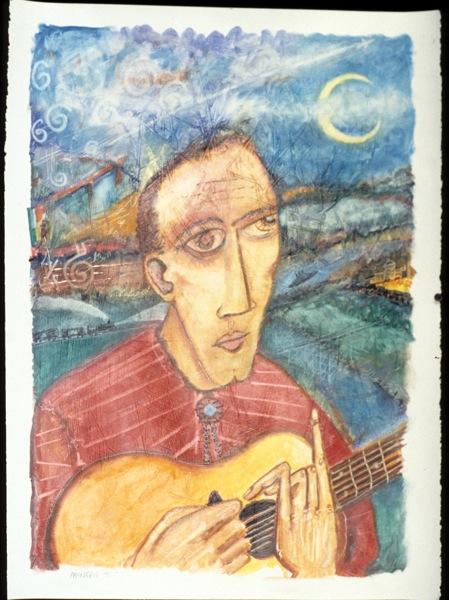
Patrick: I shifted [from painting] to live music performance five or six years ago. I like it because it takes a lot of physical energy to perform and I like the community and the collaboration of it. And there are all these other non-artistic considerations that inform that decision: You realize you need a community, and ask yourself what kind of artistic work best builds community. And music has that quality.

In Lexington, I know all the players. I’ve been here so long; I have the rolodex. There are people who hire me for private parties. I played at Alfalfa’s every Friday night for ten years. One of the problems with being an innovator is, people want to buy a known product. And they’ll ask, “What do you do? Is it like this?” And my response is, “Well no, it’s not like that.” Also, the cultural scene has been dictated by college students – that’s been a limiting factor. Natasha’s is a wonderful example of trying to do it right from the artist’s point of view. It’s a good marketing gig because it’s high profile; they do a great job of marketing. The Lexington Area Musical Alliance (LAMA) is a great new thing that’s going on that goes right to what we are talking about; it was created expressly to support local music production and performance.

Music right now because of its communal sense is a real important thing. People know how music makes them feel and they know that that’s important. These guys are in front of you live, making this thing happen, and you see the mistakes, you appreciate the humanness of what is going on, with its triumph and its potential disaster. It really is how church functions. We come together and we acknowledge certain things and reaffirm them amongst ourselves and these guys on the stage are going to create something under the threat of failure. That’s a magical moment and that’s truly music making. [My] next album is going to be live. That live feeling is real important.

Last night I saw Big Maracas playing right down the street from me here. A guy from South America, Enrique, came up here and taught all these guys all these Latin rhythms and it’s like you’re in Havana, and it raises my blood! That’s my favorite band because I’m just instantly made happy. Everybody was just gyrating: young people, old people, people who had some money and people who looked like they didn’t have money – and everybody was in communion.

Frances: How has Lexington’s relationship to art matured since you started out, and what draws you to – and keeps you in – this city?

Patrick: When I started out downtown Lexington in the ‘80s, it was me and the lawyers – there were like three other artists. Now everybody is wanting to be an artist and talk about art and even a business magazine wants to talk about art because they see that, in a society that has a lot of problems, part of what we are doing is dying off so something else can grow, and art is the laboratory for that. There are those individuals that are bold and persistent and experiment. I responded to a certain reality around here that has its limits and I just bought into and accepted those limits and don’t always think about how they can change.

Central Kentucky’s my home and that is a powerful elixir to sip – and you want to make it work. I’m glad I stayed here, because there was a period where I left, and I always came back like a magnet. I’ve met a lot of good people. The woman I’ve spent the last 25 years with, Claudia Hatfield, an oil painter and chef, I met at the University of Kentucky in art school, so that’s a great benefit. I’ve had this primary relationship with somebody that is like me – that is an artist – and we sit at the breakfast table and we talk about what we’re confronting. They’re witnessing what you are going through and you’re witnessing what they’re going through. The value of that kindred spirit can’t be overstated as far as survivability goes.

To see more of Pat’s work and listen to his songs, become a friend on Facebook.
What’s cooking… in MY Kitchen?

21 Aug

While summer is still sizzling, I want to share with you some of my latest local recipes. But wait – before your mouth starts watering – it’s not what you think!

Although I totally appreciate food as an art form – and absolutely admire my friends who try their culinary skill at exotic dishes, artisanal recipes and ethnic cuisine – I might as well just come out and say it (for those of you who don’t already know): I don’t like to cook.

I basically just want to write.

MY kitchen is made up of words.

But food and words are not mutually exclusive. In fact, one of my favorite recent creations was written from an interview I did with local Kentucky chef and restaurant owner, Ouita Michel. I could relate to her comment, “For me as a chef, using locally produced foods gives everything that we are doing a sense of authenticity. At each of our establishments, we are expressing what Kentucky is today through the use of Kentucky artists and Kentucky farm goods and preserving old Kentucky locations.” In the travel industry, this is what we call “sense of place,” and it is critical to the authenticity of tourism product.

I wrote the piece for Business Lexington, the Kentucky Bluegrass region’s local business journal. Back in May, Editor-in-chief Tom Martin asked me to do some coverage of travel industry trends and sustainability issues, as well as profiles of interesting local figures as appropriate to fit each weekly issue’s theme. Here are some more of my articles from the past four months:

Aug. 19, 2011 interview with fine artist, musician and film maker Patrick McNeese

July 22, 2011 interview with Lexmark’s sustainability director John Gagel

July 8, 2011 overview of sustainable restaurant scene in Lexington

July 8, 2011 Lexington residents share favorite places to eat

June 24, 2011 overview of tourism trends today and tomorrow

June 24, 2011 overview of Lexington’s hospitality industry

May 27, 2011 tourism as an economic factor affecting sustainability

May 27, 2011 three ways businesses can be more sustainable

And so, while I may not love to cook, when it comes to mixing up ideas, flavoring them with just the right words, and baking it all into a delightfully tasty creation, I’m as talented as any chef. A blank Word document is to me what a clean kitchen must be to a culinary artist, a tabula rasa ready to become the palette for the next tantalizing masterpiece.

What do the Rolling Stones have to do with Gratitude?

25 Mar

I got a call today from an old college friend, a friend who knows me well and appreciates my eccentricities. When he asked what I was doing, I replied that I was watching a Rolling Stones video. I then tried to explain that I was doing research for my blog and that the Stones were helping me practice Gratitude. This ended up sounding lame even to me, and I had to tell my friend to just wait for the blog, and then it would all make sense. And so, here it is…


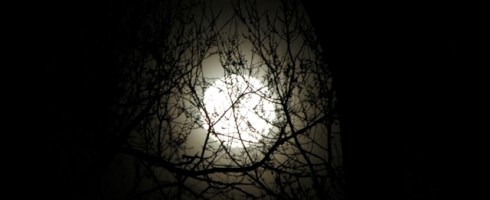
A year ago at the time of the Spring Equinox, I was living in the tropics, taking part in an exotic international experience full of adventure, romance, fun and excitement. Immersed in the beauty of the ocean environment, I relished gorgeous sunrises and sunsets, thrilled to amazing ecosystems and rare wildlife sightings, all the while embraced by the warmth and openness of the Latin American culture. The full moon rising over the Pacific Ocean on the Nicoya Peninsula in Costa Rica took my breath away. There was never a dull moment.

Over the past year, my mom had some health issues back in the states, my romance became more challenging than nurturing, and I realized that in order to be true to myself, I needed to transition away from the exotic life of travel, and back to what I felt was a much more mundane existence: living with mom in my bland, dull, ordinary, conservative hometown, what some half-affectionately refer to as “Rifle Town,” Winchester, Kentucky.

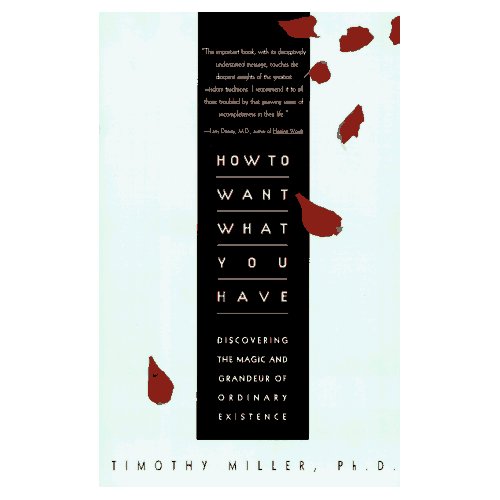
Then, in one of life’s awesome little ironies, my former husband gave me this book called “How to Want What You Have: Discovering the Magic and Grandeur of the Ordinary” by Timothy Miller. And I opened myself to the possibility that maybe life was not so bad.

This is not a book about anti-materialism or voluntary simplicity, as the title might suggest. It’s about how to stop constantly wanting something other than what we have right in front of us. Miller is a cognitive psychologist who writes in a very simple, straightforward style, exploring ideas based in Eastern philosophy from a modern psychology perspective. He examines how we drive ourselves crazy by focusing so much attention on our human desire for more of everything… more wealth, more stuff, more power, more attention, more sex, even more spirituality or more love! According to Miller, whether what we want is good or bad for us doesn’t really matter; it is the act of focusing on the desire that prevents us from living in the here and now, appreciating what we have, and treating others the way we want to be treated.

One of the passages I like the most talks about how meditation – or taking a meditative approach to life (however you choose to do it) – is conducive to wanting what you have because when you meditate, you realize over and over again that you just need to stop thinking about what you want and just sit there with an empty mind. “If you meditate regularly, the cycle of desire and renunciation is repeated thousands of times,” Miller writes. “You might think of it as reprogramming a computer. The original program essentially states, ‘Try to get what you want. Try to gratify your instincts.’ Meditation gradually alters the original programming.” Meditation also is conducive to helping us practice Attention, Compassion and Gratitude, which are the disciplines Miller advocates to facilitate wanting what we already have.

When I was talking to my friend about this earlier, he reminded me that Sheryl Crow must have read this book when she wrote “Soak up the Sun,” which has that line, “It’s not having what you want, it’s wanting what you’ve got.” But I actually use three other songs to remind me of the three practices that Miller advocates to keep us focused on wanting what we have: Attention, Compassion and Gratitude. You are free to try this at home, and the videos provide a fun way to remember the ideas.

Practice: Attention

Artist: Carly Simon

Song: Anticipation

Theme: “These are the good old days.”

Concept: Being here now and realizing this is the precious present. We can all easily remember the line that ends this classic tune, and remind ourselves that even though we tend to always look to the future and think of what we think and hope is going to happen, even that future, when it does occur, can ultimately only happen “in the now.” If we use the reminder “These are the good old days” as a way to bring our attention back to the present, it becomes easier to see how good we’ve got it, right now, and to realize we have no control over what will happen.

Watch the video.

Practice: Compassion

Artist: Bruce Springsteen

Song: Hungry Heart

Theme: “Everybody’s got a hungry heart.”

Concept: Empathizing with others and seeing that everyone you encounter is just trying to get the same things you are in life. In another of life’s little ironies, I’ve never been as big a Bruce Springsteen fan as is the partner I recently left behind. But I have to admit it resonated with me when Miller mentioned “Everybody’s got a hungry heart” as the mnemonic to help us in realizing that even the people who annoy us most (he uses examples such as neighbors with barking dogs or kids scrawling graffiti on our town’s infrastructure) only want the exact same things we want in life: acceptance, shelter, power, love.

Watch the video.

Practice: Gratitude

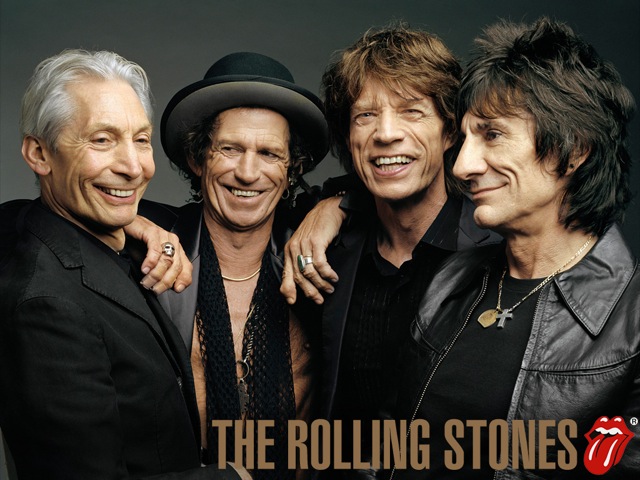
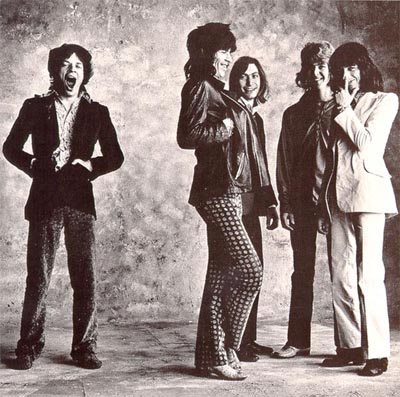
Artist: Rolling Stones

Song: You can’t always get what you want

Theme: “You can’t always get what you want, but if you try sometime, you just might find you get what you need.”

Concept: Being happy with what you’ve got and thankful for the things that surround you each and every day. Remember the opening funeral scene of The Big Chill? This song was the perfect choice for expressing the resolute nature of grief when we lose something, or someone, we thought would always be there. This theme is a perfect way to remind me that, even if I may not have everything I think I want, I always have all that I really need… and then some. And that realization makes me immensely grateful.

Listen to the song.

This year, the Spring Equinox visited central Kentucky with an appearance of the incredible super moon, the same moon that shines over the Pacific Ocean, and over the tropical beaches I have now left behind. I’m now focused on taking part in what adventures, fun and excitement I can find in and around my old Bluegrass stomping ground, immersed in the beauty of a comfortable and aesthetically pleasing home in a wonderful park-like neighborhood with older trees, squirrels, rabbits and lots of bird species. Here I am embraced by the warmth of very close friends, some of whom have known me for more than 40 years. I relish this special time with my mother, here and now, a relationship that is precious and which I know I cannot have forever. When I practice Attention, Compassion and Gratitude, there is never a dull moment… and occasionally, if I’m lucky, I even get to soak up the sun.

Watch the video.

Read another cool blog post about this book.

Networking, paying it forward and a request for help

16 Feb

Do you know anyone, anywhere, who needs an editor, writer, marketing or communications professional?

When I was cutting my teeth on corporate America, working as a proofreader at an advertising agency in Lexington, Kentucky, the person who made the connections to get me that stepping-stone position was a male executive in the company who took the time to read a short résumé that demonstrated little experience except for award-winning essays at two colleges, including a piece analyzing a song by Joni Mitchell. He remains a dear friend to this day.

Try as I might, I couldn’t ascend from proofing to writing during the one long year I spent in that company. Whenever I heard an ad rep fretting because the copywriter was out for the day, I would dart out of my office into the hall and literally throw myself at the poor salesperson’s feet pleading, “I can write it!” But to no avail. When all my attempts to write copy at the ad agency ended in disappointment, I moved on to the local newspaper, where I was finally allowed to write – in the Creative Services (Promotions) department. Here again, it was a male editor who gave me my chance to cross train in the newsroom, so that I could taste the life of a reporter, a skill I later capitalized on when I had my own company and the paper became my client.

Many more stories would reveal that it was the men in the journalism, media and marketing worlds that were nurturing enough to help me get all my first big breaks. Most women I had met along the way thus far seemed to take the attitude of, “Good work getting this far, good luck getting any further, and oh, by the way, I’ve been your supervisor for the past six months so I just thought I’d say hello. Let’s chat again in another year or so.”

This repeated experience was what later prompted me, while working for myself as a successful freelance writer, to found and direct a non-profit organization based on the concept of successful business women mentoring low-income, undereducated women who needed a chance to discover their talents and find better job opportunities. I worked at this for a good five years before one day suddenly realizing that, while helping others get a leg up, I had inadvertently stopped bringing in an income for myself. It was then that a female friend and colleague suggested I do an interim stint at a travel association that needed an editor for its full-color monthly magazine. During that time, another professional female fostered my initiation into the travel industry so that I eventually took the position full-time.

I’ve been working in travel writing, editing and marketing ever since. And whenever someone writes or calls me asking for networking help, whether they are young or old, male or female, experienced or not, I always follow the model set for me early on by Jim Gleason and Jim Durham, and later by Susan McDaniel and Catherine Prather, and I go out of my way to read the person’s résumé, conjure up good connections for them from my network, call someone who might know a great contact, or e-introduce them to the most likely connections to help them get where they want to go with their career. I do this automatically, without thought; it’s my lot in life to be this way, a characteristic, like having crazy hair and green eyes. It’s what I do; I pay it forward.

And now, I am in a position to ask others to do this for me. I need to find new paying contracts that can utilize my editing, writing and marketing skills in a telecommuting capacity, either in the travel industry, or anywhere else. Book publishing and online publishing are of interest. I am based in an office in Winchester, Kentucky, where I can keep an eye on my mom. I can travel for up to two weeks at a time. My bio, experience, references, publications and other CV elements are all right here on my blog. Do you know anyone, anywhere, who needs an editor, writer, marketing or communications professional? Is there anyone in your network you could put me in touch with via an e-introduction?

My early mentors demonstrated that networking only works when everyone plays the game, when each person in the chain tells others what they need and what they want, when we all pay it forward – and that’s there’s nothing wrong with asking for help when you need it. Thanks in advance for any connections you can provide. I hope you will let me know how I may, in turn, help you.

Cynthia Cusick, artist interview

9 Dec

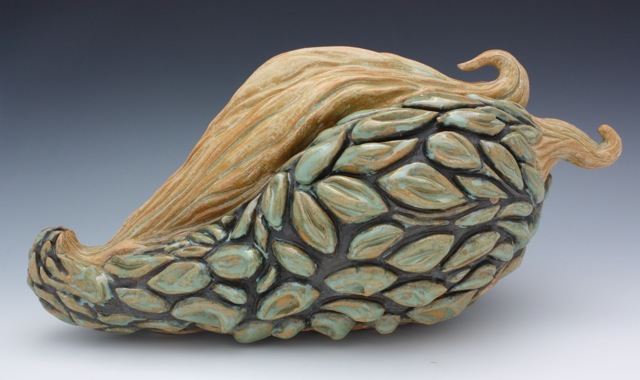
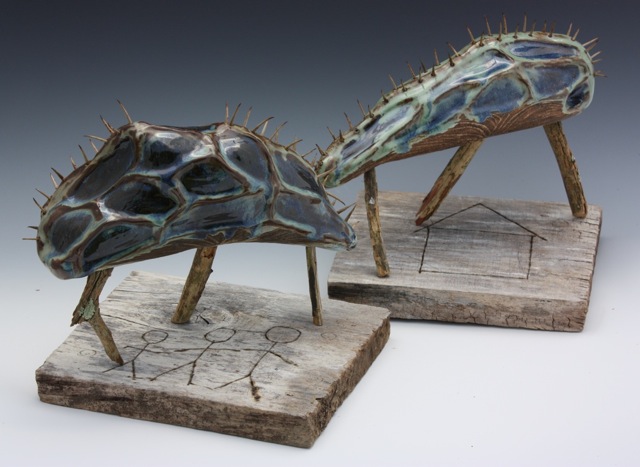
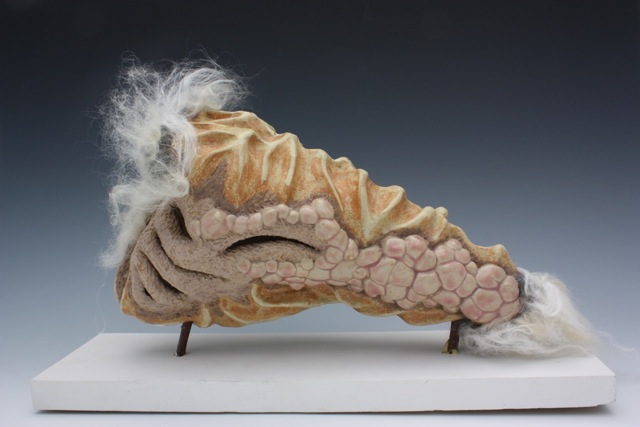
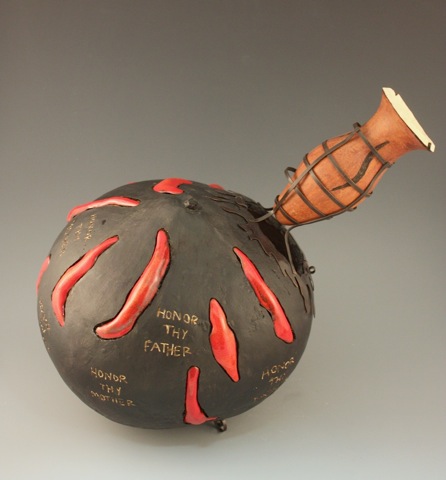
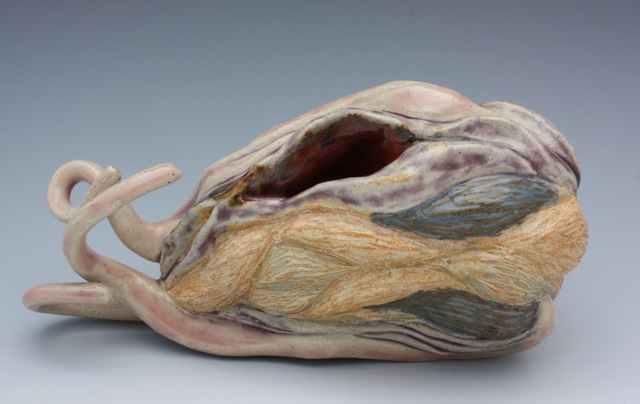
My friend Cynthia Cusick – a native New Yorker turned Eastern Kentucky farm girl – graduated last year from Eastern Kentucky University with a bachelor of fine arts degree. I remember visiting Cindi in her studio in late March of that year when she was preparing for her senior show. I stood amazed at the incredibly personal expression she had accomplished through metal and glaze stoneware sculptures. Looking at the scope of the work, I was reduced to tears – and then so was she. We shared one of those moments between friends where no words are really necessary, and then we proceeded to unload some of the then current hardships in both of our lives, while all around us an incredible collection of psychologically rich shapes and figures fresh from the kiln glistened and shone like the tears drying on our cheeks. Since then, Cindi, who turns 48 next week, has created a body of work that is only just beginning to be known and make an impression in the art world. I interviewed her over coffee yesterday about her life and work.

Cindi’s web site, where you can see all of her current work, is here.

Frances: When you were little, what did you want to be when you grew up?

Cindi: Lots of things. I used to have one of those Pocket Books for each grade from Kindergarten to High School where you filled in your school name, the teacher’s name, your friend’s names, your likes and dislikes, attached a picture and each grade had a pocket to keep all those stellar report cards. They had a check box section at the bottom of each page to check what you wanted to be when you grew up. It was segregated by gender. I never liked the options for the girls so I felt I had to check “nurse” or “teacher” until I started checking “other” from age 7 on up. Some of my choices were “Archeologist” and “Horse Owner.”

Frances: What was your family’s attitude toward creativity?

Cindi: Actually, my family was very creative, especially Mom, but more towards the performing, song and dance, plays-on-stage type thing. They did a lot of parties with their friends and at church that had themes so they were always getting dressed in costumes and Mom was usually the one to draw up the invitations and posters. Mom has a lot of artistic talent that she never fully realized, I don’t think. I know she sent away for a “Commercial Artist’s Course” that gave instructions in this big printed book, chapter-by-chapter, about how to draw advertisements. Think Coca-cola ads from the 1950s. I still have the book. Mom and Dad grew up in the ‘40s so there was a “safe zone,” a very conservative type of creativity. Not the avant-garde type of stuff, at all.

Frances: What were your first creations as a youngster?

Cindi: Ha! My brother, Larry, and I once made an entire town out of construction paper on the window sill of our room when it rained during our entire school break. We also created our own newspaper. We both did a lot of drawing. God, I drew constantly. I was horse crazy from an early age so I was always drawing horses. My brother, Larry, is a year younger than me so we grew up like twins from a young age until about 13, 14. I do remember when we would play outside behind the apartments on Garth Road in the woods; I would dig in the dirt looking for clay. I imagined I was on some Indian trail and would try to find clay to make pots. Of course, it was mostly regular dirt, not necessarily clay but I did like playing in the mud even then.

Frances: How do you feel your family shaped your attitudes towards feminism and gender issues?

Cindi: Wow. Typical Baby Boomer family. Dad was a WWII vet, Mom was the wife and home-maker. Older siblings born in the 50s and then a gap of 8 years between my older brother, Jimmy, and me, born in 1962 so I was in an odd place. By the time I was finishing elementary school and entering puberty, it was 1972 and Gloria Steinem, Betty Freidan and the like were in full swing. Women were burning bras, feminists and feminism were on the news, Ms. Magazine was launched and the options for girls was opening up. Although Mom and Dad were what I would call very conservative and traditional in gender roles, they were also less demanding on my brother and I since we were like a second family with eight years between me and Jimmy, so there was less concern that I was playing with GI Joe’s along with Barbies. They were less uptight raising Larry and me, I think. I grew up with an attitude that whatever I wanted to achieve, I could do it although, having said that, there were still gender specific expectations at home, like I should know how to cook and I should have a natural inclination to be a mother. Which I didn’t have.

Frances: When you lived in NYC, were you conscious of the artistic community? Did you realize that you were living in a place where art was a lot of more accessible and integrated into the social structure than in many other places?

Cindi: You can’t be from the NYC area and NOT be conscious of the artistic community. That’s like asking someone from Denver, Colorado if they were conscious of the mountains. NYC=ART, end of story. I suspect the same can be said of Paris, London, Berlin and other big, culturally  important cities. In a way, I think the intensity of the artistic climate, the fact that it is part of the fabric of NYC made it incredibly intimidating to me. I had dreams, as I grew up, drawing horses and then people and things, of being an artist but I was too scared to do it because look what I had to compete with? The rest of the world. I don’t think I was ever really aware how integrated art is in NYC, and how diverse and forward-thinking art is, not fully, until I left NYC to come to Central Kentucky.

Frances: What type of art or which artists do you remember first being affected by?

Cindi: Modern art. Picasso. Mondrian. Bauhaus architecture. the Abstract Expressionists, Pop Culture. Andy Warhol. I hated all of it at first, because I think I was expected to hate it coming from a nice conservative, Catholic family. But at the same time, our family was a little bit weird so I was really, really drawn to the difference from traditional, “safe” art all the same. What really drew me in and kept me going back was the subversiveness of it all. I was ultimately attracted to the power those kinds of art had in making people think.

Frances: You worked as a graphic artist for many years. How did you eventually decide you needed to move your creativity out of that realm and into a new direction?

Cindi: Graphic design was a cop-out for me. It was a “safe,” productive, respectful way for me to “be creative,” i.e. I could make a living at it earning a steady paycheck and appear to have some creative input into the things I was making. The reality was that I was always doing the bidding of the client and creativity, as far as I defined it, was an illusion. It was immensely frustrating. “Stifling” is the word I’d use. Plus so much of graphic design is promotion and product-oriented which left a bad taste in this old punk rocker’s mouth. When you see the ins and outs of media manipulation, it takes the joy out of life. How did I decide? One word: divorce. Nothing like a divorce to make you sit down and say, “Right. What the hell am I doing and why? Time for a change!”

Frances: Moving from the sophistication of New York City to live in rural, and intensely traditional, Irvine, Kentucky, has been a challenge that you have both relished and risen to. How have you learned from the culture around you and how do you feel it has shaped your artistic philosophy?

Cindi: I think I’ve always felt I would have to leave the environment of NYC to fully express myself. I’ve always yearned for the outdoors, the woods, the dirt, the rivers, the oceans, the wild animals and weird plants, trails, hiking, National Parks – I love National Parks. New York doesn’t have a lot of that. Because of that, I had a deep desire to go back to those profound, visceral relationships with nature that I experienced in my childhood in the woods behind the apartments. Being able to come out here to Estill County and own my own acreage allows me to indulge that part of me whenever I need inspiration. Estill County is traditional in one sense, but this part of Kentucky also has some quirkiness and eccentricity that I feel comfortable with, almost like walking around Thompson Square in the East Village – but you have to drive longer distances and people have funny accents. To me. As for artistic philosophy, I think I get to be one of the eccentrics. I enjoy my role as a weirdo New Yorker, an outsider. You get a much better view, in my opinion.

Frances: You have explained your work as referencing organic objects as a metaphor for life experiences. Please explain this statement.

Cindi: I’m really interested in nature, in general. My niece, Allison, is a biologist, and I think that is the coolest thing. I’d love to do some of the things that she does. She and I observe nature. She records it differently than I do but we’re getting at the same thing. We’re both trying, I think, to make a bridge between the organic world all around us and ourselves. Particularly now, in this day and age of technology, much like the Industrial revolution, I suspect we humans have this tendency to disassociate from the rest of the natural world because we’ve conned ourselves into thinking we can live without it and in spite of it, but nothing could be further from the truth. We are nothing but an elaborate container for some sophisticated DNA whose mission is to reproduce itself with as much variety as possible to ensure biological success. We are organic. Driving a hybrid car, watching a flat panel TV, having 1,000 “friends” on Facebook is us deluding ourselves that we are removed from nature. Or above it. So I like to use seeds and other organic references as a reminder of our vulnerabilities. We can crap on the planet and ignore climate change, but we’re only hurting ourselves in the end.

Frances: What role does observation play in creativity and in producing art?

Cindi: Art is about observation. In order to produce art as opposed to replicate art, you have to really be aware and observe without judgment, initially. Then, when you take in the information around you, you can analyze and say something about what you see. Without observation, it’s all just paint-by-numbers.

Frances: Your work often centers around feminist themes and women’s issues. What is your stance on feminism and do you consider yourself a feminist?

Cindi: All women in Western culture, as far as I’m concerned, are feminists, even if they chose to adhere to more traditional roles. The very fact that you can have a choice about that means you support the feminist point of view, whether you realize it or not. Unless you want to give up the right to vote, you’re a feminist. Going back to school as an older woman, and a non-traditional student, I was always struck by these teens and 20-somethings that swore off anything feminist just because they were so far from the roots of the movement. I would just politely and directly contradict them when they would say, “Oh, I’m not a feminist!” “Bullshit,” I would say, “You’re a student here, right?” They missed the irony in their enrollment.

Frances: Why did you gravitate toward clay as a medium and why do you love working with it?

Cindi: I blame Joe Molinaro, my ceramics professor at Eastern Kentucky University. I was simply trying to get my BA in Metalsmithing and had to take a Ceramics I class. He told me I needed to be a ceramics major. I felt threatened so I caved. Okay, I’m kidding, but he did encourage me to become a ceramics major. There’s something basic, fundamental and Zen-like about working with, well, dirt. How much more basic can you get? Maybe air, but it doesn’t hold a form the way clay does. I think Joe recognized that I had a connection to the process of working in clay as well as a sense of proportion and design. He saw my relationship with the material, I think. I work in other material besides clay, mind you, but his guidance and direction helped me find my artistic voice that had been silent for a long time. Okay, maybe not silent, but my voice prior to school was directionless and lacked confidence.

Frances: Some of your work involves the use of metals, but usually juxtaposed with other materials. What does metal represent or signify for you?

Cindi: Oh, I love metal. I’ve been on a bit of hiatus from metal and I’m itching to get back in to it. I really think I have some quality metal pieces inside me that have yet to be expressed. I can sense ideas percolating but I think they’re in the future a bit. I love the strength of metal as a medium and the flexibility, if that makes sense. Metal can be illusory. It can be thick and clunky, filigree and delicate, shiny or dull, smooth and polished or textured, ominous and dark or enameled and colorful. You can set stones in it, wrap it around objects, pierce it with things, use it to pierce things, even flesh. It brings different possibilities to the table than other media. I just saw some enameled vessels that had me drooling the other day. Talk about sexual! Mmmmmm….

Frances: Themes you have explored include very personal and autobiographical experiences related to parental alienation. Talk about how that came about and how it is evolving in your work.

Cindi: My first theme or thing that I felt compelled to say in artistic form was in metal combined with gourds, organic objects that represented the human form. I was going through an intense, emotionally exhausting and draining custody issue with my husband (concerning his ex-wife) during the years I was getting my BFA from EKU. His son, who is now, seventeen, was seven and a half when I met him. He is an only child. The effect of being in the middle of two adults who were angry at each other was painfully obvious. I was appalled at the behavioral changes we saw in him as he tried to cope. Watching a child suffer when one parent willfully manipulated his natural feelings towards both parents in order to gain a legal advantage was something I never contemplated being involved with in my lifetime. Basically, parental alienation is a form of emotional abuse, as it asks the child to give up their natural love for a parent in order to make another parent happy. It’s about exploitation of power relationships of parent and child, and development of co-dependency. Eventually, you hope, depending on the kid, that they figure out what’s going on, and a lot of kids do, but it’s at the cost of a wound that can take a lifetime to heal. In our case, my stepson is on a path of awareness, now, so that’s good for him. I’m sure I’ll find some way of expressing this “turning of a corner.” Needs time to ferment.

Frances: You have said to me before that the only constant in life is change. I have noted how you, like many artists, are able to find relative calm amid a myriad of chaotic events and situations. Talk a little bit about your ideas surrounding chaos, change and constancy.

Cindi: Well, it is true that the only constant is change, that’s what this universe does and yet when you step back and observe, all that change makes a whole picture at the same time it’s changing. In fact, some times we can see not change, itself, but the still moments and effects of time and change, and then we sense the process it took to get from one place to the next. I always like to say we’re all in a race for the pine box or however you choose your finale. In the mean time, as we race, we hit mile posts and then reflect on them afterwards. I think it’s been helpful to me to embrace change instead of fighting it. It certainly makes things a lot more enjoyable and fun. When I feel a chaotic situation, if I take the time to step back from the chaos, I can find some beauty and pattern in the illusion of randomness. It reminds me of those fractal patterns, in each part of the fractal if seems there is no pattern or direction to the graph, but when you keep the algorithm going and step back, this weird snowman-like pattern emerges. It’s a meta experience. Think of those videos where it starts in the middle of a busy, chaotic, ugly, urban street and then zooms out further and further until your view is of the planet and the swirling atmosphere. Just depends on your perspective.

Frances: An area of exploration in your work involving change is that of sexuality and the natural progression of a woman toward infertility in the form of menopause. How does your work explore this?

Cindi: I never wanted to have kids. We’re biologically programmed and built to procreate and recreate. I had all the desire to do the procreative act, but not the follow-up, which I never had to do. As a result, I’ve always had questions – either from within or more often foisted upon me from without – about defining myself as a female, as a woman. What does it mean to be woman if you do not fulfill the biological plan of bearing children? Even if I didn’t want children, just the fact that I was still technically able to have them somehow fulfilled that part of my identity as “woman.” So what happens when you go through menopause and now, you can no longer have children? What becomes of the female identity then? What about sexuality? The libido drops but there are ways around that and you can still have sex without the childbearing. But I already do that so what’s changing and will my perspective on my sexuality change much as a non-mother, as opposed to a woman who has been sexual and had children? I’m also really fascinated by issues of sexual orientation and gender identity. It’s so fundamentally biological and yet we humans make things so complicated.

Editor’s note: Cindi has an entire series of work exploring menopause. You can see it here.

Frances: You have said that a recurring theme in your art is a trust in the intuitive. Please elaborate.

Cindi: A visiting artist to EKU once said to me, “If it comes from your hands, it’s good.” English wasn’t her first language so she may have wanted to be more elaborate, but the simplicity of what she did say had such a profound effect on my work. I went from simple gourd forms in clay to bending the form and finally, my carving exploded. I stopped planning what I was going to do and trying to get my hand work to match the expectations in my head. As a result, I was able to let go and just let my hands do their thing and then stop and look at what I had created. I began a dialogue with myself about what I was trying to say to me. I became my own best feedback. I let my intuition guide me and then tweaked and guided it to help express what I was trying to say. In effect, I let go of my artistic control freak that had been holding me back.

Frances: What is your relationship to spirituality and how does this play out, if at all, in your creative process?

Cindi: I’m an atheist from a good Catholic background! If I had to identify a spiritual philosophy that most resonated with me, it would most likely be Buddhism and Zen, although I’m not into all the ritual. But from what I know about Buddhists and Zen practitioners, they’re not so hung up on the ritual. I do have an aversion to religion and religious structures and dogma. I find all religions have some philosophy that is simply humans trying to understand their place in the universe and to a degree, they function like different languages saying the same basic message. Unfortunately, it’s the hierarchies and dogma that muck it all up, in my opinion. I’m not sure that spirituality plays out in my creative process, itself, as much as the creative process is my spirituality.

Frances: How do you define wisdom and do you think this differs for women and men?

Cindi: Wisdom! Ha! I know nothing. What is wisdom, anyway? I think wisdom comes, also, from keen observation and awareness. And some detachment from the emotional. In that sense, it probably does differ for women and men, but merely by the path it takes, I think. Ultimately, I think we’re all capable of attaining some wisdom at some point in our lives. Before we die.

Frances: How do you define balance and how do you achieve it?

Cindi: Balance, for me, is being able to come back to a place where I can begin again. It’s like yoga poses. For every pose, there is a countering pose to strengthen the whole. So if I’m very focused for a time, I need some relaxation and goof-off time to counter it. On the other hand, if all I’m doing is goofing off, I need some task, goal or chores to counter my idleness. Chop wood, carry water. When things get really out of sorts, I always try to remember to come back to the basics, food, shelter, water, chores. When in doubt, wash the dishes, sweep the floor. You can get a lot of thinking done without thinking then. And the other great thing for balance and a nice reality check are my animals. Nothing puts it all in place like my cat’s purr, my dog licking my hand or leaning on me for some head pats or the nuzzling of my horses, sinking my face into their coat and breathing in their smell.

Frances: What are your current goals with respect to your work in the next five years?

Cindi: I’m looking at the year 2010 as a year of transition for me, which makes 2011 Year One. So, we begin. In five years, I’d like this to be a comfortable process, the making, the creating, the showing, the thinking. I’d like to keep my ability to see the beautiful patterns in the chaos. I’d like to see my work evolve from media specific to more integration between clay, metal, organic and so on as it’s called for. Right now, my goals are getting the most exposure for my work as possible, as far across the region, country and globe as possible. And also to keep making work. I wouldn’t mind doing something unexpected and/or collaborative, either. All in good time. I’ve got a whole second half of my life to enjoy this.

You can follow Cynthia Cusick, artist, on Facebook, here.

Greetings from Kentucky!

4 Nov

“Parting is all we know of heaven, and all we need of hell.” ~Emily Dickinson

I am an editor, writer, branding and marketing professional who works almost exclusively in the niche of sustainable travel, supporting tour operators and tour suppliers (such as hoteliers) in finding clients who appreciate their responsible approach to tourism.

I am currently in a professional transition, having recently left a full-time position with a sustainable travel company, Seascape Kayak Tours, and seeking contracts and new adventures that will supplement the part-time social marketing support I bring to Terra Incognita Ecotours and Cayuga Sustainable Hospitality.

After living part of the time in Canada and part in Costa Rica, I have relocated for the most part back to my home town of Winchester, Kentucky, to spend more quality time with my mother. I am an only child and she is my only living parent. However, I am first and foremost a traveler, and I am willing to take on jobs that will take me to any part of the world, so long as I am not living there full time. Because most of what I do as a marketing person is virtual, I currently support tourism activities in Belize, Borneo, Brazil, China, Costa Rica, Galapagos, India, Madagascar, New Zealand, Nicaragua, Peru, Rwanda and Tanzania — right from my home office in Central Kentucky.

Friends and colleagues have recently encouraged me to (1)Start a blog about your travel work, and (2)Market yourself online. Always ready to embrace the unconventional, I decided to combine these activities into one conglomerate site, here, where I’ll share not only my professional history, but also bits and pieces of my tourism industry involvements that I find particularly fascinating.

I love feedback!